
What Most People Miss When They Try to Monetize AI Tools

Artificial intelligence has opened the door to thousands of new business ideas. Entrepreneurs, freelancers, and startups are launching AI-powered products faster than ever, from content generators to automation assistants. The opportunities are real, and they are growing. But having access to powerful tools does not automatically translate into income.
Many AI-driven ventures struggle to gain traction, not because the technology fails, but because the business thinking behind them is incomplete. The most common gap is not technical. It is strategic.
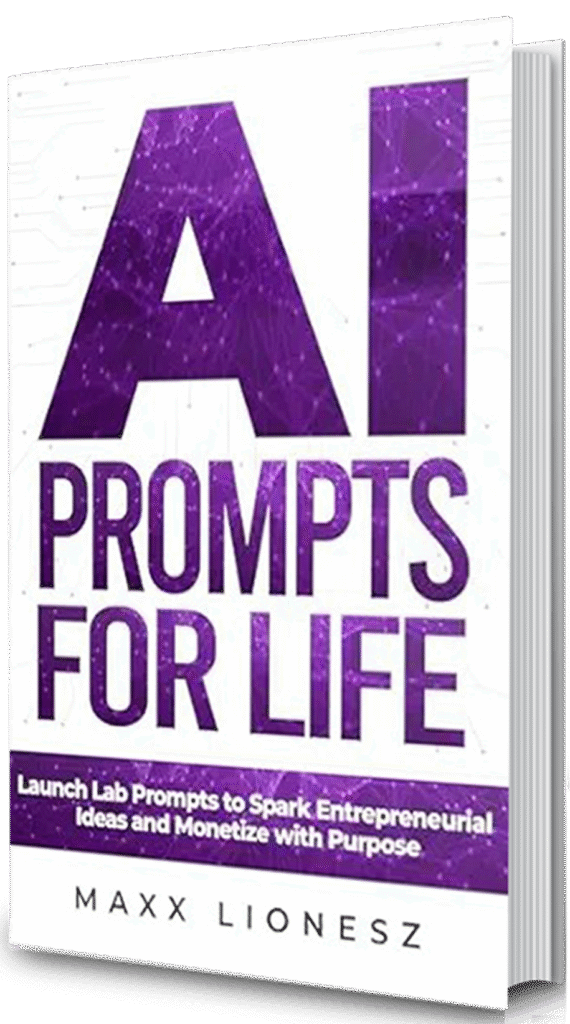
That is exactly the territory that AI Prompts for Life: Launch Lab Prompts to Spark Entrepreneurial Ideas and Monetize With Purpose by Maxx Lionesz was written to address. Built around the BE R.E.A.L. framework, the book gives entrepreneurs a structured, values-driven system for turning AI prompts into real business concepts, validated ideas, and sustainable income streams. Here are five of the most important things people miss when trying to monetize AI tools, and what to do differently.
1. AI Alone Is Not the Product
One of the most common misconceptions is assuming that adding AI to something automatically creates value. In practice, users tend not to pay for AI itself. They pay for outcomes.
People do not subscribe to an AI writing tool because it uses machine learning. They subscribe because it saves time, reduces friction, or helps them generate revenue. The same logic applies to AI image generators, chatbots, and analytics platforms.
Businesses that find traction with AI tools tend to position themselves around a specific, clear result. Rather than leading with the technology, they lead with the outcome:
- We help businesses answer customer queries around the clock.
- We reduce content creation time significantly for busy marketing teams.
- We automate repetitive tasks so founders can focus on growth.
The technology enables those outcomes. But it is the outcome itself that earns the sale. If you cannot clearly articulate what problem you solve and for whom, the AI behind the product will not compensate for that gap.
2. Most Markets Are Already Crowded
Thousands of AI tools launch every month, and many are nearly identical in function. They differ mainly in branding or interface. This creates a competitive environment where broad, generic products often struggle to stand out, no matter how well-built they are.
What many founders underestimate is the power of niche positioning. Rather than building another general-purpose AI assistant, the businesses that tend to grow more sustainably focus on specific industries or well-defined use cases:
- AI for legal document analysis
- AI for real estate lead generation
- AI for eCommerce product descriptions
- AI for medical transcription
Niche tools often outperform broader competitors because they address specialized problems more directly, and their users feel genuinely understood. Positioning is not just a marketing decision. It is a product decision.
Try This Prompt in ChatGPT:
I want to build an AI-powered tool or service for [industry or audience]. Help me identify three underserved problems I could realistically solve, and suggest a positioning angle that sets me apart from generic AI competitors. Be specific about the pain points and the type of person who would pay for a solution.
3. Users Care About Workflow Integration
A capable AI tool can still fail to gain adoption if it disrupts how people already work. Many creators underestimate how resistant users are to changing their existing habits and tools.
Businesses already depend on platforms like Slack, Google Workspace, Shopify, Notion, and various CRMs. AI tools that fit naturally into those environments tend to have a much higher chance of adoption and monetization. Convenience and compatibility often matter more than novelty.
Instead of building a standalone platform that asks users to change their entire workflow, consider how your AI solution could enhance what people already use daily. The easier the integration, the lower the barrier to adoption.
4. Free Users Rarely Upgrade Without a Clear Reason
Offering a free plan is a common strategy, and it can work. But many AI businesses discover that free users stay free indefinitely, because they never encounter a strong enough reason to upgrade.
Effective monetization creates a meaningful and honest gap between free and paid tiers. Paid plans should unlock features that deliver clear business value, such as:
- Faster processing for higher-volume users
- Team collaboration and shared workspaces
- Advanced analytics and reporting
- Higher usage limits for professional workflows
- Automation features that save meaningful time
- Priority support for business-critical tasks
People pay when they genuinely believe the return outweighs the cost. That belief has to be built through real experience with the product, not just promised in the marketing.
Try This Prompt in ChatGPT:
I am building a freemium AI product for [describe your audience and what the tool does]. Help me design a feature ladder that gives free users a genuine taste of value but reserves business-critical capabilities for paid tiers. Suggest three to five specific features that would motivate a serious user to upgrade, and explain why each one matters to that audience.
5. Trust and Consistency Matter More Than Features
AI tools can produce inaccurate or inconsistent outputs. This creates hesitation, especially among businesses that depend on reliability for day-to-day operations.
Many founders concentrate heavily on expanding features while underinvesting in reliability, transparency, and support. Over time, long-term monetization tends to depend more on trust than on capability. Users want to know:
- Can this tool produce consistent results I can depend on?
- Is my data handled securely and responsibly?
- Will support respond if something goes wrong?
- Can I rely on this platform for tasks that affect my business?
A simpler, dependable AI product will often outperform a feature-heavy but inconsistent one. Building trust is not a feature. It is a foundation
How the BE R.E.A.L. Framework Strengthens AI Monetization
The five gaps above are not just tactical problems. They reflect a deeper issue: most people approach AI monetization without a clear framework for thinking, prompting, or executing. That is where the BE R.E.A.L. framework, developed by Maxx Lionesz, provides a genuine advantage.
BE R.E.A.L. stands for Royalty, Elegance, Assertiveness, Loyalty, and Financial Freedom. Each pillar shapes not just how you use AI tools, but how you build with them purposefully.
| BE R.E.A.L. Pillar | How It Shapes Your Monetization Prompts |
|---|---|
| Royalty | Own your expertise. Prompt with the confidence of an industry authority, not a beginner asking for shortcuts. |
| Elegance | Craft clear, specific prompts. Simple, focused language consistently produces more actionable AI output. |
| Assertiveness | Direct the AI precisely. Tell it what you want, what format you need, and what to avoid. |
| Loyalty | Keep your prompts aligned with your mission and values. Build an income stream you can sustain and believe in. |
| Financial Freedom | Embed revenue goals into your prompt workflow. Every session should move you closer to a real business outcome. |
When you apply the BE R.E.A.L. framework to your prompting and strategy sessions, AI stops being a random idea generator and starts functioning as a structured business development tool. Every prompt becomes intentional, and every output moves you closer to a real outcome.
Moving From AI Idea to Real Income
The barriers to monetizing AI tools are rarely technical. They are strategic, positional, and behavioral. The entrepreneurs who make meaningful progress tend to share a few things in common: they start with a specific problem worth solving, they test before they build, they build trust before they scale, and they treat AI as an accelerator for their thinking, not a replacement for it.
AI can help you identify your niche, sharpen your positioning, and draft your pitch. But validating that idea with real potential customers is still your responsibility. The tool speeds up the process. The entrepreneur does the work.
Ready to Turn AI Ideas into Real Opportunities?
Each of the five gaps covered in this article, from niche clarity to trust-building, is addressed directly inside AI Prompts for Life: Launch Lab Prompts to Spark Entrepreneurial Ideas and Monetize With Purpose by Maxx Lionesz.
The book is designed for entrepreneurs, freelancers, creators, and side hustlers who want to use AI with more intention and less guesswork. Instead of generic strategies, it gives you a hands-on prompt library, a step-by-step validation system, and the full BE R.E.A.L. framework to help you move from idea to execution with confidence.
Inside, you will find:
- AI prompts designed to help you discover and validate a profitable niche
- Frameworks for building a minimum viable offer before investing heavily
- Practical monetization strategies for products, services, and content
- Productivity systems to automate the repetitive work and protect your focus
- Ethical AI guidance so your business is built on trust, not just technology
Whether you are launching your first AI-powered side hustle or expanding an existing business, this book gives you a structured path from prompt to profit.
Get your copy today and start building something real.